
Ca' dei Zago
Prosecco returned to grandfather’s ways — and became a new wave
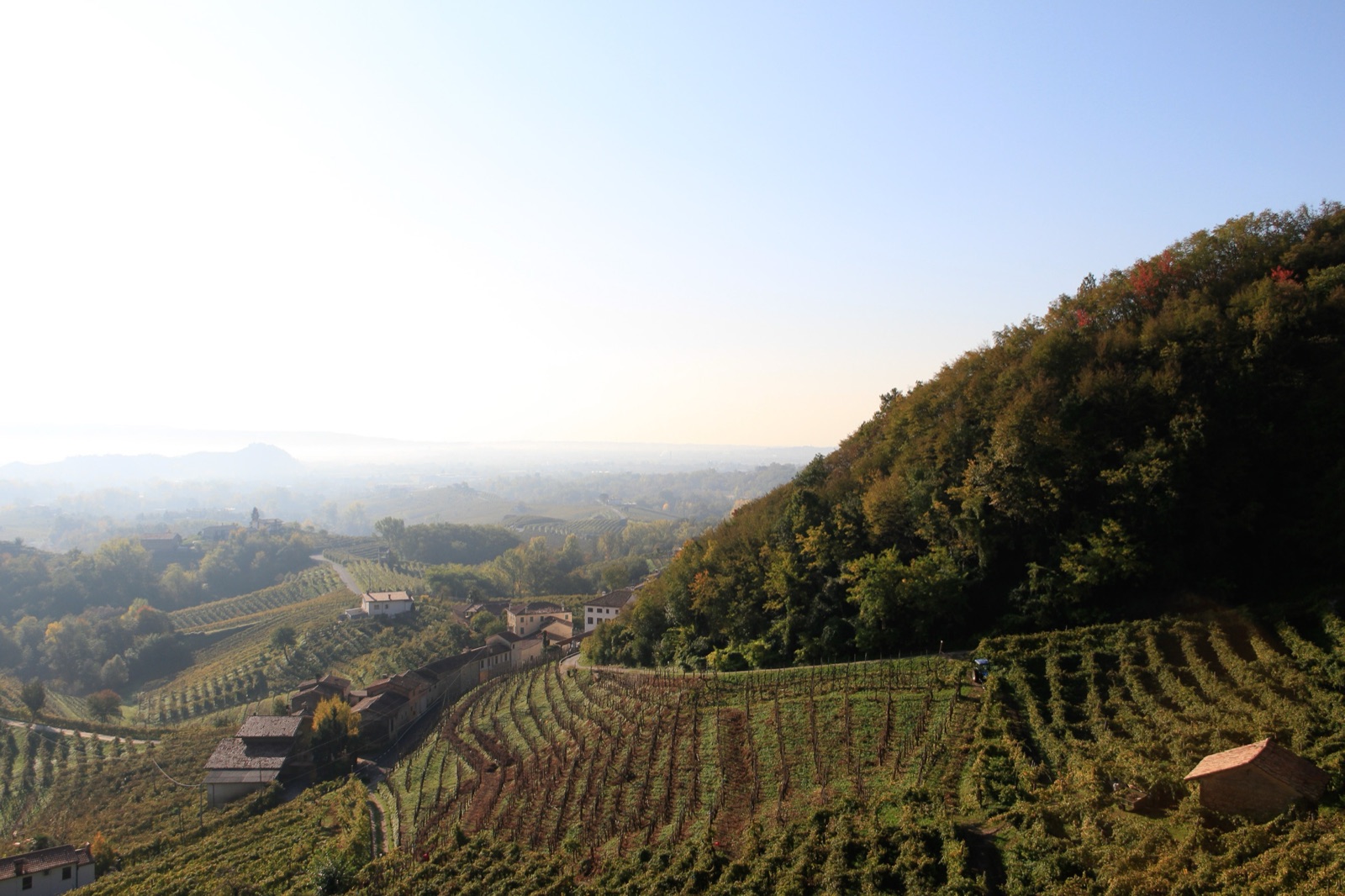
1924: a farmhouse on the hill
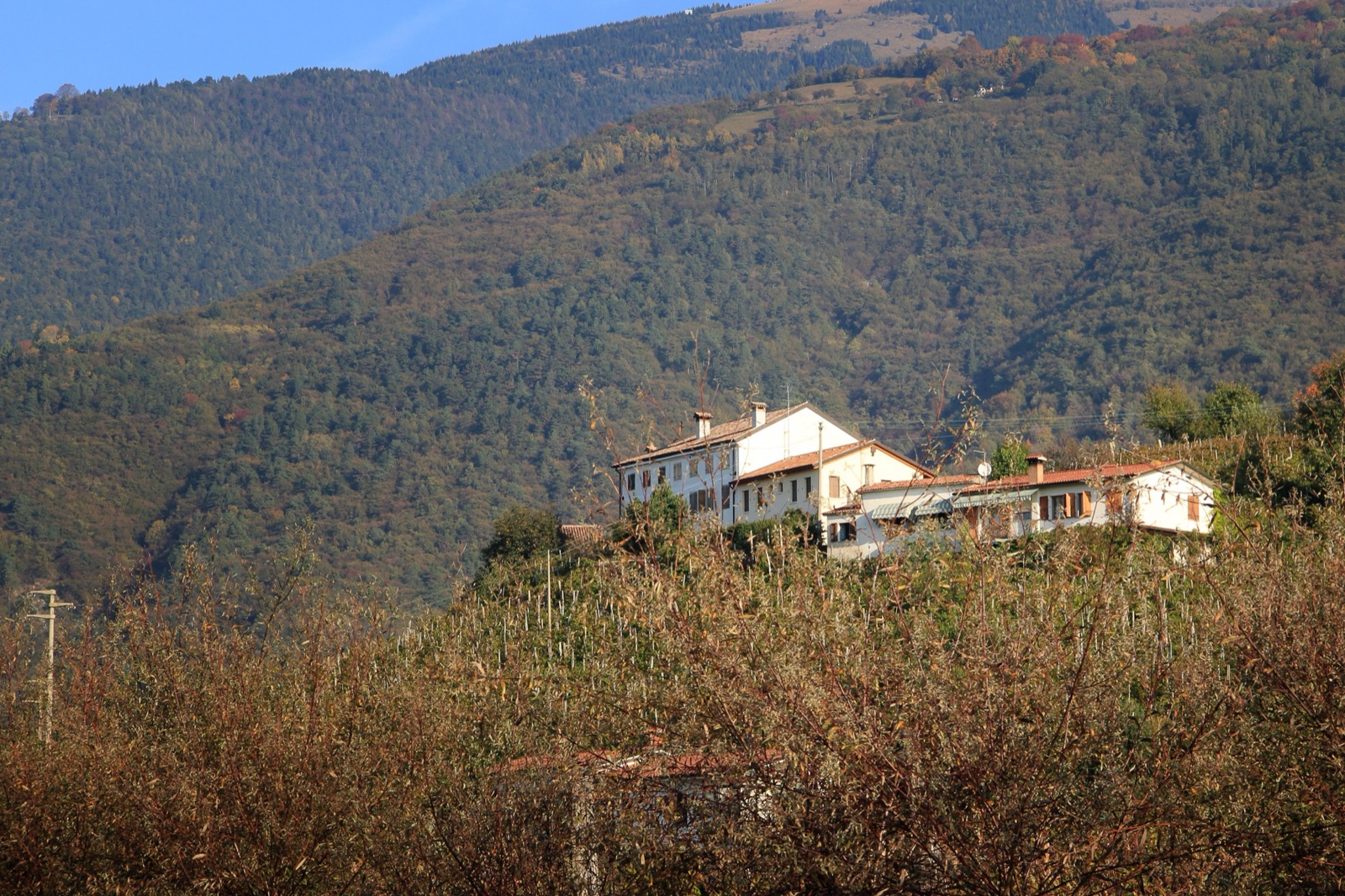
Valdobbiadene in the Veneto, where the steepest and most beautiful hills of Prosecco roll on. In 1924 the Zago family bought a farmhouse and land in the village of San Pietro di Barbozza. A few plots were already planted with vines. The family still lives in that house today. Ca’ dei Zago means “the house of the Zago family”.
When the founder died young, his children, then in their twenties, took over the farm. In 1965 one of them, Giuseppe, settled on a single way of making the family wine: Valdobbiadene Prosecco re-fermented in the bottle. It is how Ca’ dei Zago makes Prosecco to this day.
Leaving the lees in the bottle
Most Prosecco today is made sparkling in large tanks in one go, then filtered clean. Ca’ dei Zago is different. The finished wine is bottled in spring, and a second fermentation in the bottle creates the bubbles. The yeast lees are not removed but left at the bottom of the bottle. Because there are lees at the bottom (fondo), it is called Col Fondo — the old way of Valdobbiadene’s farmers.
Poured into a glass, it is slightly hazy. In return it keeps aromas of citrus and honeysuckle, a wet-stone nuance and a savoury finish. There is almost no sugar, and a glass empties quickly. This is the Colli Trevigiani.
“When machines replace hands, the wine gets worse”
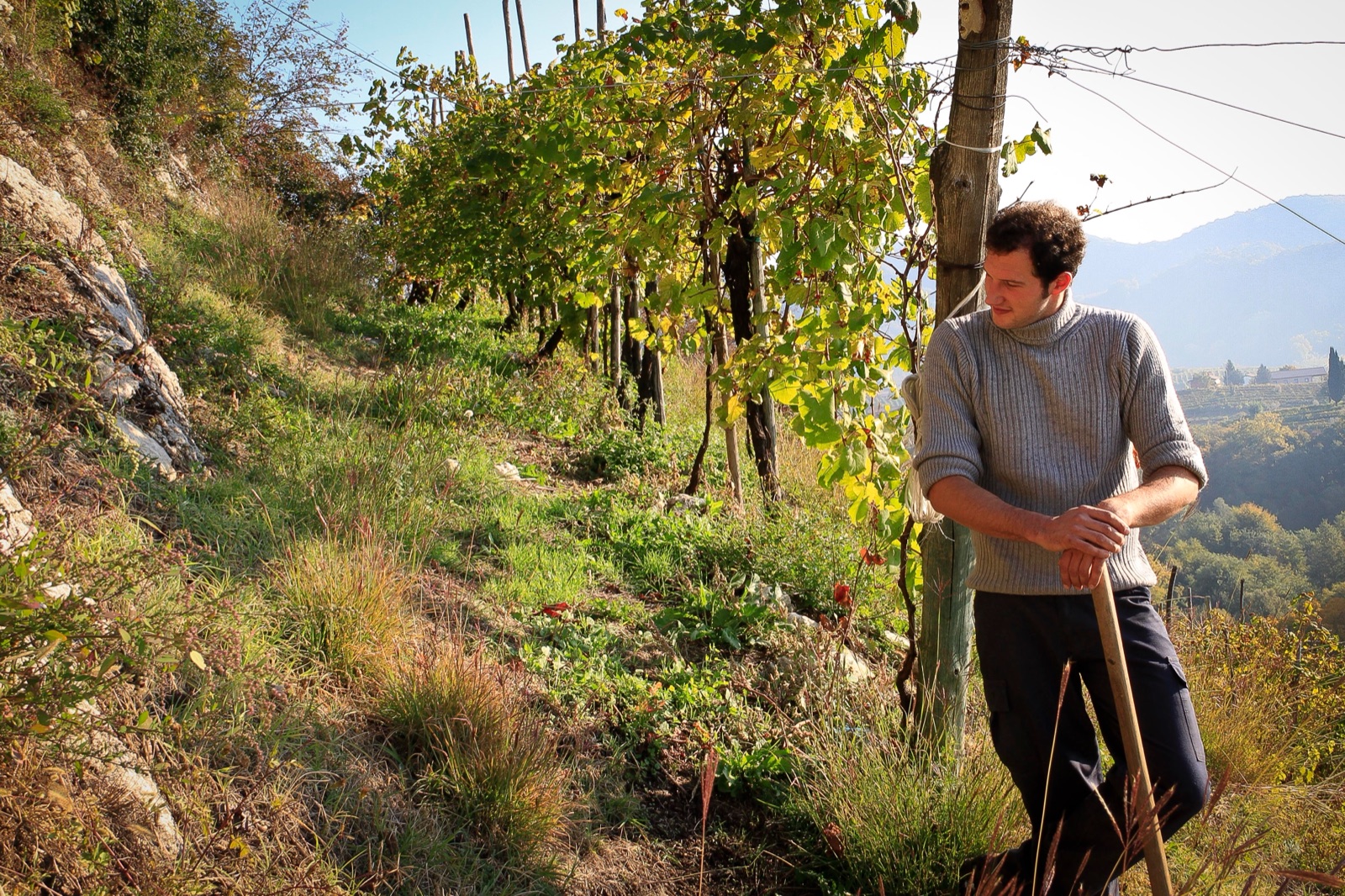
Ca’ dei Zago’s vineyards lie on steep slopes at around 250 metres. The gradient keeps machines out, so almost all the work is done by hand. Grandfather Giuseppe always said: “When machines replace hands, the quality of the wine falls.”
No herbicide is known to have been used on this land since 1924. Bottling and racking still follow the cycles of the moon. In 2020 cattle returned to the vineyards for the first time since 1992: native Grigio Alpina cows, now only a few thousand strong, graze the vineyard grass and return it as manure.
Finding grandfather on a plane
Giuseppe’s grandson Christian Zago studied oenology formally, but found himself lost between what he learned at school and his grandfather’s ways. He went to New Zealand and worked at several wineries, including biodynamic farms.
Around that time, reading a book by biodynamic master Nicolas Joly on a plane, Christian realised that what his grandfather had done by instinct all his life was exactly this. Returning home in 2010, he took up the family business with his sister Marika, who had come back from experience in Champagne.
Prosecco’s “new wave”
Wine Spectator introduced Christian as “the new wave of Prosecco”. Yet what he did was not to invent something new but to bring his grandfather’s method back to life.
Christian had one more dream: a Prosecco that would not fade with time. The result is Metodo Classico Dosaggio Zero, aged 14 months in bottle, then riddled by hand to gather and remove the lees. No sugar at all is added. The 2020 vintage was a limited release of just 3,970 bottles.
A “slow Prosecco” the critics noticed
- Col Fondo 2020 — Wine Enthusiast 94 points, Editor’s Choice, no. 29 in the 2021 Top 100 Wines of the Year
- Metodo Classico Dosaggio Zero 2020 — James Suckling 92 points
The method a grandfather kept a hundred years ago has become the newest Prosecco of all.