
Kellerei St. Pauls
1907: Alpine wine that thirty-six farmers began making together
Thirty-six farmers
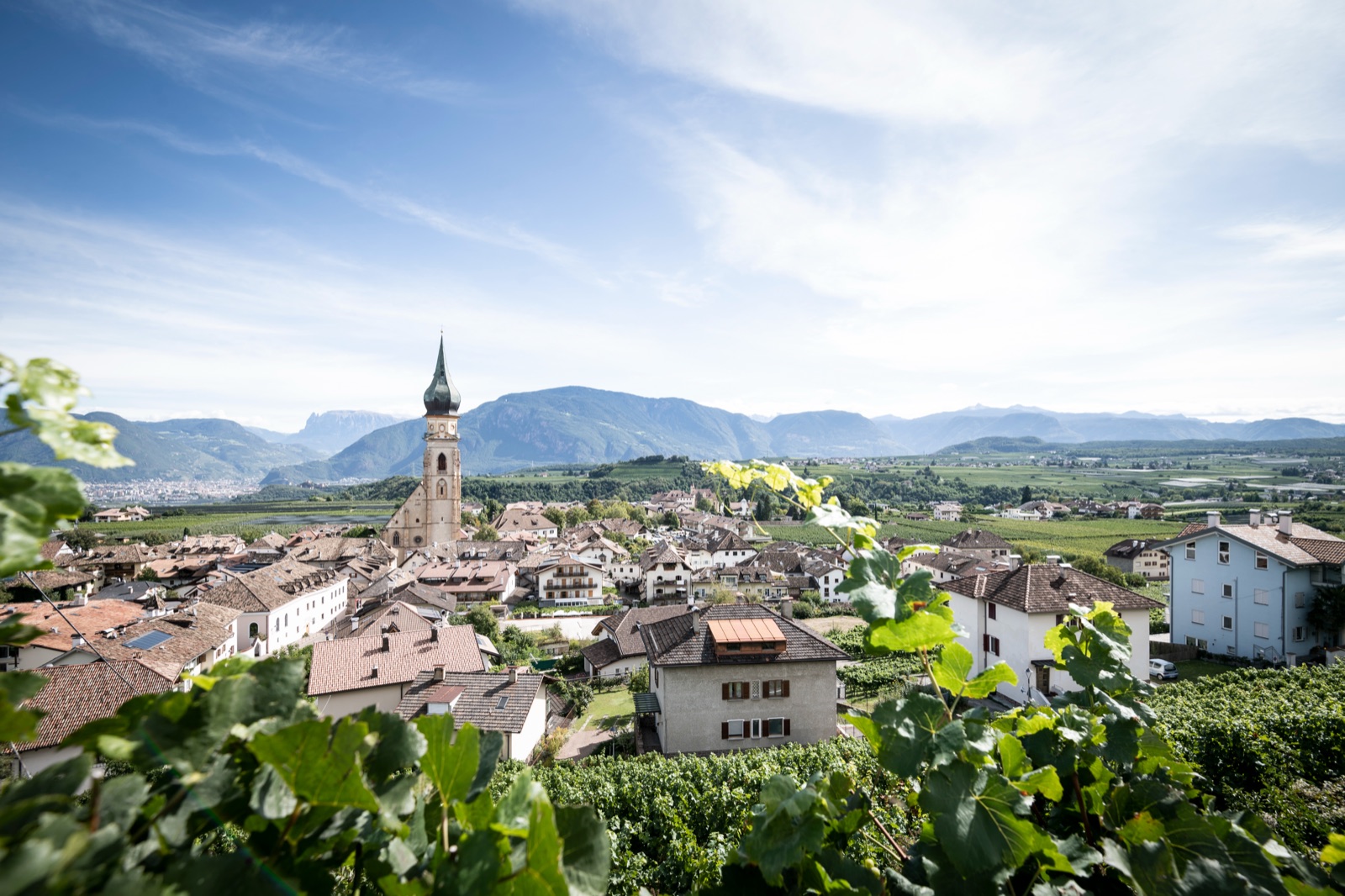
Alto Adige, Italy’s northernmost region, where German and Italian are spoken side by side. In Eppan, 8 km south-west of Bolzano, lies St. Pauls, a village with a pointed bell tower.
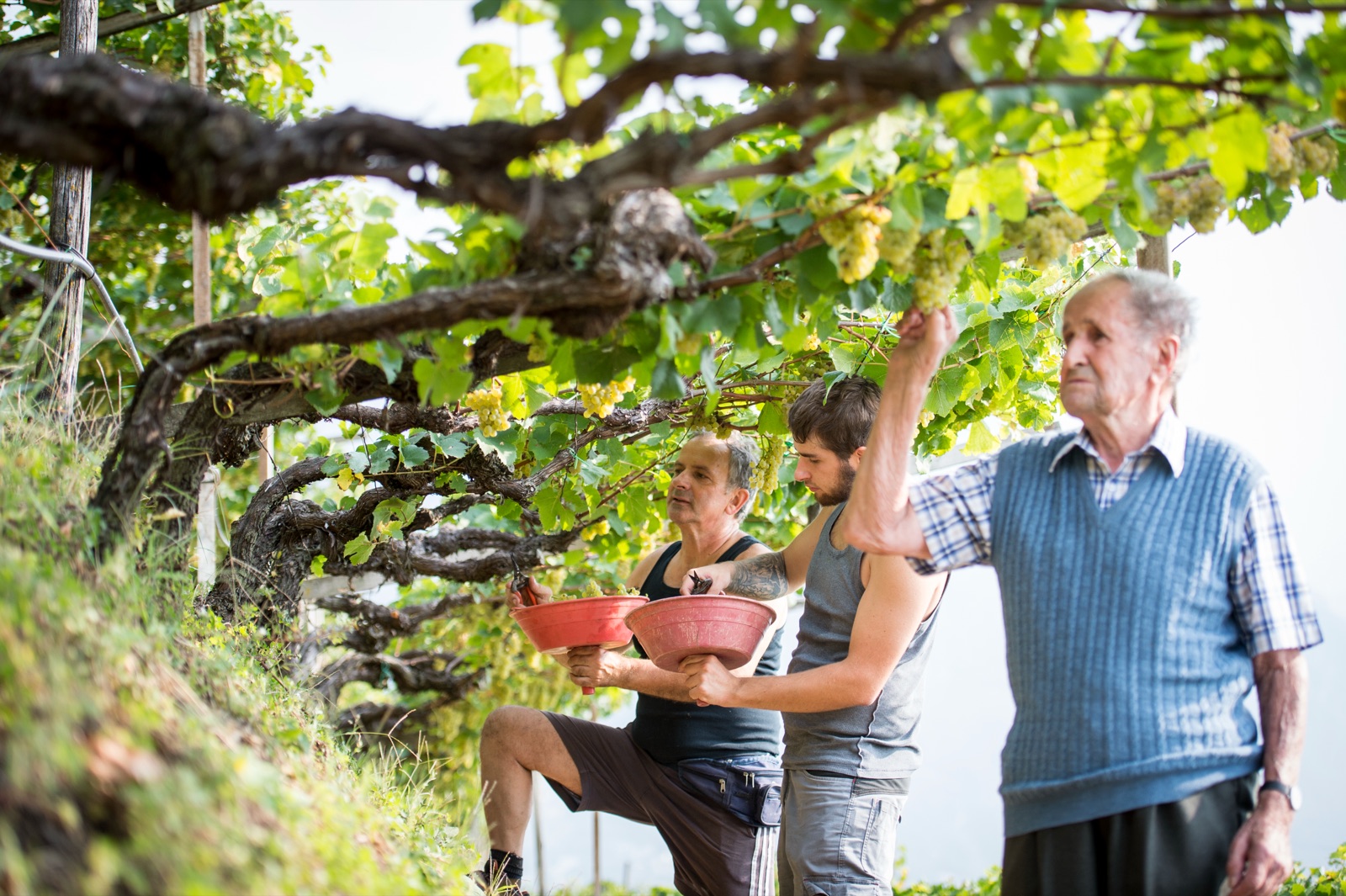
In 1907, 36 farmers from this and neighbouring villages joined forces. Instead of selling the grapes from their small plots for next to nothing, they decided to make wine together and share its value. So began Kellerei St. Pauls. At first it did not even have a cellar, and stored its grapes in a storeroom borrowed from the village inn, the Schwarzer Adler.
One hectare per family, the vineyards of 190 households
Membership grew year by year: 130 members in 1933 and 215 by the centenary in 2007. Today about 190 families grow grapes under the St. Pauls name. Each tends little more than a hectare on average. It is a cooperative in scale, but look inside and it is 190 small family farms brought together.
Together their vineyards cover more than 175 hectares, scattered between 300 and 700 metres on moraine left by Alpine glaciers and on stony limestone. As early as the 1920s the cooperative required its members to plant only quality varieties. Quality has been St. Pauls’ principle ever since.
Wine moved by gravity
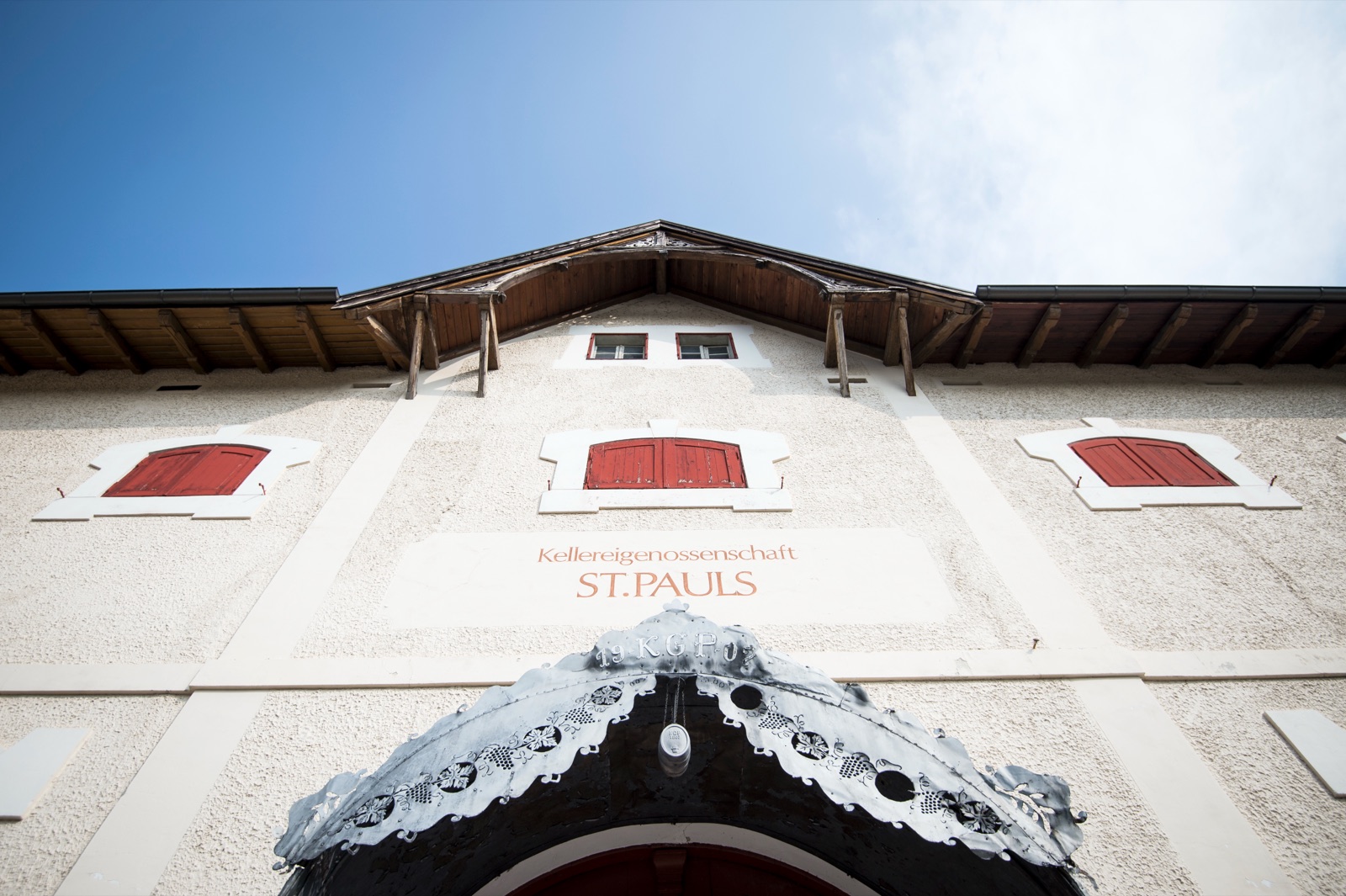
The cellar still stands in the middle of the village. From the 1960s St. Pauls began bringing grapes into the cellar whole rather than crushed, using differences in height so that grapes and wine flow by gravity. Without being pushed roughly by pumps, the wine is less tired. Since 2010 a 700 m² solar installation has generated about 60% of its electricity.
There is also a bunker built during the war in 1937. With constant temperature and humidity, since 1979 it has been the resting place for more than 70,000 bottles of sparkling wine.
Alpine sun, Mendola wind
In Alto Adige the Alps to the north block cold air while warm air rises from Lake Garda to the south. The sun shines nearly 300 days a year, and after sunset cool winds descend from the mountains. By day the grapes ripen; by night their acidity and aromas are preserved.
St. Pauls gave this wind a name. It calls the Sauvignon from the Gfill hill on the slopes of the Mendola “the wine kissed by the wind”. From limestone gravel at 450–550 metres, Gfill Sauvignon offers grapefruit, gooseberry and fresh-cut grass and finishes with a salty minerality.
A house of white grapes — and Pinot Noir
St. Pauls’ signature grape is Pinot Bianco. Its faces are Plötzner, from steep east-facing slopes at 550–650 metres, and Kalkberg Weissburgunder, fermented in large wooden casks and aged 12 months on its lees. The fresh Pinot Grigio and the flamboyant Justina Gewürztraminer, with mango, lychee and rose, are not to be missed either.
The most talked-about red in Alto Adige today is Pinot Noir. As Burgundy prices have soared, it has emerged as a fresh and elegant alternative. St. Pauls stands at the heart of this trend with Luzia, full of cherry and raspberry, and the Lehmont Pinot Noir Riserva, from vines of around 30 years and aged 15 months in oak.
A name critics and competitions noticed first
- Gfill Sauvignon 2024 — Sauvignon Selection by CMB 2026 Gold
- Justina Gewürztraminer 2019 — Mundus Vini 2020 Gold
- Lehmont Pinot Noir 2019 — Wine Advocate 94 points
- Plötzner Pinot Bianco 2021 — Wine Advocate 92 points
- Kalkberg Weissburgunder 2021 — James Suckling 91 points
The promise of thirty-six farmers has guarded the wines of the Alps for more than a hundred years.